Underrated Vintage Watches Collectors Keep Ignoring
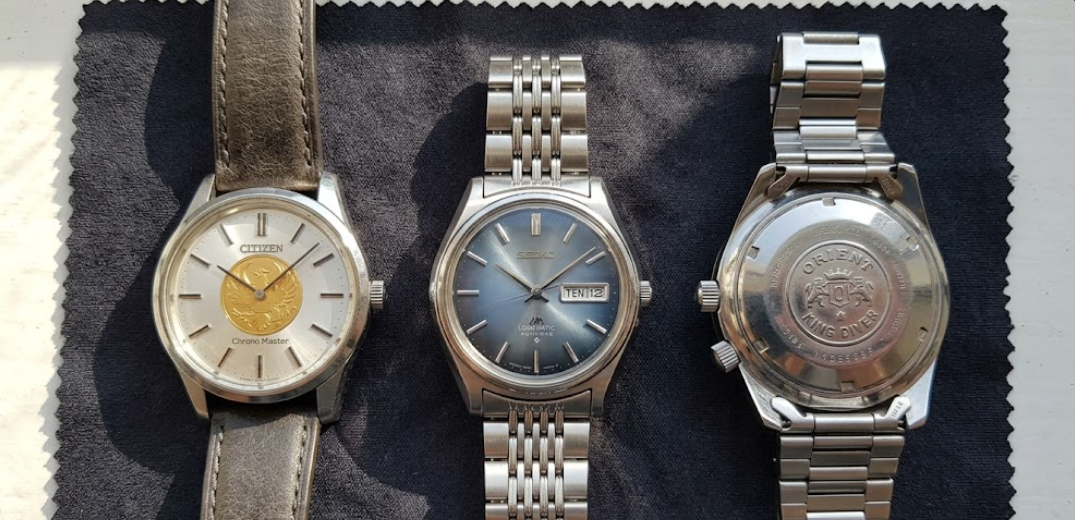
There is a specific type of watch that sits in the background of every serious auction lot, priced at a fraction of what it is worth and ignored by anyone who arrived in this hobby via YouTube. It is not poorly made. In most cases it is exceptionally well made. It simply has the misfortune of being the second-most-famous version of something, or of belonging to a brand that never got the Western press coverage it deserved, or of looking, at first glance, like a competent watch rather than a landmark one.
Underrated vintage watches exist at every price point. Some are overlooked Seiko references that sit just below the famous lines everyone knows. Some are from Citizen or Orient, brands that were producing work of comparable quality to Seiko through the same decades, in relative obscurity as far as English-language collectors are concerned. A few come from names even more peripheral than that.
What they share is a gap between what they are and what people are currently willing to pay for them. That gap will not last indefinitely. It never does.
Why Certain Watches Get Overlooked
The vintage watch market does not reward quality evenly. It rewards legibility — watches that are easy to research, easy to authenticate, and backed by enough forum threads and YouTube videos that a new collector can develop confidence quickly.
Seiko dominates because it is well-documented. The reference numbering makes authentication tractable. There are established databases, thriving communities, knowledgeable dealers. A new collector can pick up a 6105 and feel they understand what they have. That accessibility is part of what drives the premium.
Citizen is different. Orient is different again. The scholarship in English simply has not caught up to the quality of the objects. Researching vintage Orient means leaning on a handful of dedicated blogs, Japanese-language resources, and the hard-earned knowledge of collectors who have been at it for years. Fewer people are willing to do that work, which means prices reflect uncertainty rather than quality.
This is where patient collectors find the real value.
Citizen Chrono Master: The Watch That Out-Finished King Seiko
The Citizen Chrono Master first appeared in the brand's lineup in 1967. This was Citizen's top-tier dress watch — a direct competitor to Seiko's Grand Seiko and King Seiko lines — and the execution is, by most accounts, comparable.
The hand-winding versions from the first production year use the calibre 0920, a 22-jewel movement regulated to a higher standard than standard Citizen production. The automatic versions, which followed the same year, deploy Citizen's 52xx and 54xx calibre family — either the 5240 or the 5440 with 33 or 35 jewels respectively, adjusted to chronometer grade or "Superior Chronometer Special" grade in the top variants. The automatic movement beats at 18,000 bph and can be hand-wound, which is a practical advantage often missed in the discussion of these watches.
The case on a typical Chrono Master automatic is 37mm, slim enough to disappear under a shirt cuff. The dials tend toward silver sunburst finishes with applied indices — conservative, precise, intentionally dressed-down. What sets the watch apart visually is on the other side: the case back features a deeply pressed gold phoenix medallion, sometimes described as the gold eagle medallion, which rivals and in some opinions surpasses the equivalent caseback treatment on King Seiko and Grand Seiko pieces of the same era.
Production ran from 1967 through to the early 1970s.
The collector argument for the Chrono Master is straightforward. Here is a watch that competed directly against King Seiko in the Japanese domestic market, built to comparable accuracy specifications, with a caseback finishing detail that is genuinely superior. The differences in the secondary market between these two brands tell you more about documentation and community than they tell you about quality.
Current prices for good examples of the Chrono Master hover in the $200 to $500 range depending on condition and variant. The rarer blue dial "Elite Special" versions — striking and unusual for the era — appear occasionally and tend to sell quickly to people who know what they are.
Buying Considerations
Service parts for the Citizen 52xx and 54xx movements can be harder to source than Seiko equivalents, though the movements themselves are robust. Dial condition is the primary value determinant — the silver sunburst finishes age gracefully but are susceptible to moisture. As with all vintage dress watches, buy the best example you can afford rather than hoping a mediocre one will clean up.
Seiko Lord Matic: The Forgotten Middle Child
The Seiko Lord Matic launched in 1968 as the successor to the Lord Marvel line, positioned below King Seiko and Grand Seiko in Seiko's internal hierarchy. It is precisely this positioning — not quite at the top — that has kept it undervalued relative to its quality.
The movement at the core of most Lord Matic watches is the 5606 calibre: automatic, 21 jewels, 21,600 bph, with hacking, hand-winding capability, and a dual-language day-date display that allowed buyers to select between English and a second language (Kanji, German, French, Spanish, Arabic, and others depending on the market). This dual-language day wheel was a feature that Seiko would go on to adopt across most of its automatic lineup, and it was introduced here. The 5606 became one of the most widespread Seiko mechanical movements of its era, which is both its curse (ubiquitous means unfashionable) and its advantage for collectors (parts and service knowledge are widely available).
The Lord Matic Special, produced slightly later by the Daini factory rather than the Suwa factory, uses the 52xx movement family — the same architecture that underpins King Seiko Special references. These are rarer and frequently overlooked because collectors unfamiliar with the internal Seiko factory structure do not know what they are looking at.
Case designs across the Lord Matic range are genuinely varied. Some are conventional round dress cases at 35 to 37mm. Others are cushion-shaped, angular, and shaped in ways that feel more of their moment than almost any contemporary Swiss watch. The television-case variants — flattened rectangles with faceted acrylic crystals — are period objects in the best possible sense. The JDM variants carry the "LM" moniker on the dial; international versions use "Automatic" instead, a small detail that matters to completists.
Prices for honest Lord Matic examples have remained accessible: most change hands for under $200, with cleaner examples or unusual dial variants reaching $300 to $400. For a watch using movement architecture that informs the King Seiko and Grand Seiko lines from the same era, that is a meaningful disparity.
The Plastic Parts Problem
There is one genuine technical concern worth naming directly. Several 56xx-series movements contain plastic components — most notably a plastic setting yoke — that have degraded in many examples over the past five decades. A watch running fine on the wrist may develop issues with day-date setting as this part fails. It is not catastrophic, but replacement parts are not always available. Before buying, confirm the watch has been recently serviced by someone familiar with this specific issue, or factor a service into your budget and ask the watchmaker to check the plastic components specifically.
Orient King Diver: A Dive Watch That Most People Have Never Heard Of
Founded in 1950, the Orient Watch Company hails from Tokyo. For most of its history, it has operated in the shadow of Seiko and Citizen — producing technically accomplished in-house movements at lower price points, for a domestic market that rewarded reliability over prestige.
The Weekly Auto Orient King Diver, produced between approximately 1965 and 1969, is one of the most interesting dive watches to come out of Japan in that era, and one of the least known outside Asia.
The movement inside is the Orient calibre 660, one of the brand's first automatic movements. It is a substantial calibre at 30mm in size, which contributed to the watch's relatively large case by mid-1960s standards. The original King Diver measures approximately 43mm in diameter — a scale that was unusual for Japanese watchmaking of the period, where 35 to 38mm was more typical. The watch features an internal rotating dive bezel controlled by a second crown at the 2 o'clock position: an unconventional design choice that gives the watch an immediately recognizable silhouette.
The dial layout is busy by contemporary standards — day and date complications displayed separately, applied indices, lume plots — and the whole thing feels genuinely purposeful rather than decorative. This is a watch designed for someone who intended to use it.
Researching vintage Orient is challenging to say the least. There is no serial number dating system comparable to Seiko's, which makes precise year attribution difficult. The documentation available in Western languages remains thin. Fratello's early #TBT coverage of the King Diver helped introduce it to international collectors, but it remains poorly mapped compared to any Seiko diver of similar standing.
Good examples of the original Weekly Auto Orient King Diver command prices in the $800 to $1,500 range today, with particularly clean examples potentially exceeding this. The 2020 reissue launched for Orient's 70th anniversary — priced at around $475 at launch, powered by the modern calibre F6922 — has brought new attention to the original, which is the pattern that typically precedes price corrections in this corner of the market.
Sourcing King Divers
Nice examples of the Full Auto Orient King Diver do not surface frequently, even in Japan, where they are relatively rare. Most of the material that exists has spent the past several decades in Japanese estates or domestic dealer stock. For collectors outside Japan, finding a genuine, unpolished, correctly preserved example requires either patience and considerable luck on Western platforms, or direct access to the Japanese secondary market. Services such as Nivern, which source directly from Japanese domestic listings and dealer networks, are worth considering for anyone seriously pursuing rare Orient references.
The Common Thread: What These Watches Share
None of the watches discussed here benefit from a famous story. The Citizen Chrono Master has no movie appearance. The Lord Matic has no astronaut connection. The Orient King Diver is not named after a warship or a reef.
What they have instead is the actual substance of what makes vintage Japanese watches worth collecting: in-house movements built to serious specifications, case and dial finishing that reflects genuine craft investment, and production contexts that place them alongside — not below — the references that have already been discovered and repriced.
The watches that get collected first are the ones with the best stories. The watches that get collected next are the ones with the best objects. We are somewhere in between those two phases for all three of these references, which is precisely why the prices still make sense.
For collectors with the patience to do the research, that timing matters. The scholarship on vintage Citizen, Orient, and the secondary Seiko lines is improving steadily. More articles, more dedicated forums, more Japanese-language sources being translated and shared. As documentation improves, the gap between quality and price tends to close.
Where to Look
For Citizen Chrono Masters, good examples appear on Chrono24 and eBay with reasonable regularity, though condition varies significantly. The specialist vintage blogs — Sweephand's Vintage Citizen Watch Blog and Vintage Citizen Watches — are the best starting points for reference education before buying.
For Lord Matic references, Yahoo! Auctions Japan carries substantial volume, including many unserviced examples from Japanese estate clearances that can be excellent buys for collectors comfortable with a service budget. The variant range is enormous, and Japanese domestic listings tend to surface unusual case and dial options that rarely reach Western platforms.
For the Orient King Diver, patience is required. When they appear, they tend to move quickly among collectors who have been watching for them. Specialist sourcing services such as Nivern, which maintain direct relationships with Japanese dealers and monitor domestic auction activity, offer a practical alternative to waiting indefinitely for the right example to appear on a Western platform.
Conclusion
Underrated vintage watches are not a secret. The watches discussed here are known, documented to varying degrees, and genuinely appreciated by experienced collectors. What they lack is mainstream recognition — the kind that comes from media coverage, auction house spotlight lots, and accessible English-language scholarship.
That will change. It always does. The question is whether you want to build a collection before or after it does.
FAQ
What makes a vintage watch underrated? An underrated vintage watch is one where the secondary market price does not yet reflect the object's quality, historical significance, or craft. This typically happens when a watch lacks documentation in widely-spoken languages, belongs to a brand overshadowed by a more famous domestic rival, or sits just below the most prestigious tier in its manufacturer's own lineup.
Are Citizen vintage watches worth collecting? Yes, particularly the Chrono Master and Homer lines, which represent the top of Citizen's 1960s and 1970s production and were built to specifications comparable to King Seiko. Prices remain significantly lower than equivalent Seiko references, which represents a meaningful value opportunity for collectors willing to research the brand.
What is the Seiko Lord Matic? The Lord Matic is a Seiko dress watch line produced from 1968 through the 1970s, using the 56xx movement family (primarily the 5606 calibre). It sits below King Seiko and Grand Seiko in Seiko's hierarchy, which has kept prices lower than its quality warrants. The Lord Matic Special variant, made by the Daini factory using the 52xx movement, shares architecture with King Seiko Special references.
Is the Orient King Diver hard to find? Yes. Original Weekly Auto Orient King Divers from the 1965 to 1969 production period are genuinely scarce, particularly outside Japan. Most examples exist in Japanese domestic estate collections and dealer stock. Western platforms surface them occasionally, but condition can vary considerably. A 2020 reissue by Orient has increased awareness of the original.
Where can I buy underrated vintage Japanese watches? Yahoo! Auctions Japan and Mercari Japan are the highest-volume sources for domestic material, but both require language ability or a proxy buyer. Western platforms like Chrono24 carry inventory but at prices reflecting international demand. Specialist sourcing services such as Nivern source directly from Japan, handle authentication, and ship internationally — a practical option for collectors pursuing specific references without the logistical complexity of navigating domestic Japanese platforms.
What should I check before buying an underrated vintage watch? For any vintage Japanese watch: confirm movement authenticity against the reference engraved on the case back; inspect the dial for moisture damage, spotting, or lifting text; check for signs of case polishing that would have removed the original surface contrast; and ask about service history. For Lord Matic models specifically, ask whether the watchmaker checked the plastic setting yoke during any recent service.
Sources & References
- Sweep-Hand.org — "The Chrono Masters" (Vintage Citizen Watch Blog): sweep-hand.org
- Vintage Citizen Watches Blog — Citizen Chrono Master Elite Special coverage: vintagecitizenwatches.com
- The Watch Site — "Vintage Citizen Chrono Masters, Part 1 & Part 2": thewatchsite.com
- Fratello Watches — "#TBT The Citizen Chrono Master — A Vintage Alternative to King Seiko" (April 2020): fratellowatches.com
- The Samurai Vintage — Citizen Chrono Master product listing (movement and case detail): thesamuraivintage.com
- Watch & Vintage — "Seiko Lord Matic and Lord Matic Special (1968–1977)": watchandvintage.fr
- Fab Collectibles — "Seiko Lord Matic / 5606 movements": fabcollectibles.com
- Grail Watch — "Seiko Lord Matic 5606: Retro TV" (April 2018): grail-watch.com
- Adventures in Amateur Watch Fettling — "Flawed Genius: A Seiko Lord Matic 5606-8010" (July 2017): adventuresinamateurwatchfettling.com
- Orient Place — "The 1965 Weekly Auto Orient King Diver" (June 2020): orientplace.blogspot.com
- Fratello Watches — "#TBT Weekly Auto Orient King Diver — A Rare Japanese Bird" (September 2021): fratellowatches.com
- Fratello Watches — "#TBT Full Auto Orient King Diver" (February 2020): fratellowatches.com
- Worn & Wound — "Orient Turns 70 and Celebrates with a Reissue of the King Diver" (July 2020): wornandwound.com
- Fratello Watches — "Collecting Vintage Japanese Watches: A Never-Ending Journey" (September 2022): fratellowatches.com
- WatchForum.com — "What Are Some Undervalued Vintage Watch Brands?" (March 2023): watchforum.com